



Quick answer: Omega 3 fish oil gives you two long-chain fatty acids your body cannot make in useful amounts on its own – EPA and DHA. EPA is the fatty acid most closely tied to inflammatory balance, heart health and joint comfort. DHA is a structural building block of the brain, nervous system and retina. That is why the number that really matters on a fish oil label is the combined EPA + DHA per serving, not the total fish oil weight printed on the front of the bottle.
What Is Omega 3, Exactly?
Omega 3 is a family of essential polyunsaturated fats. Three of them matter in everyday nutrition:
- ALA (alpha-linolenic acid) – plant based, found in flaxseed, chia seeds and walnuts.
- EPA (eicosapentaenoic acid) – marine based, the functional omega 3.
- DHA (docosahexaenoic acid) – marine based, the structural omega 3.
Your body can convert ALA into EPA and DHA, but the conversion is famously inefficient. That is the practical reason marine sources such as fish oil remain the most dependable way to raise EPA and DHA levels in the body.
What Does EPA Actually Do in the Body?
Quick answer: EPA is the raw material your body uses to build signalling molecules that help regulate the inflammatory response. Because low-grade inflammation sits underneath so many everyday complaints, EPA is the omega 3 most associated with cardiovascular support, joint comfort and recovery.
Heart and circulation
EPA supports healthy triglyceride levels, normal blood pressure and healthy blood vessel function. This is the most heavily researched area of omega 3 nutrition, and it is the reason nutrition guidelines around the world talk about EPA and DHA intake rather than about fish oil weight.
Joints and recovery
People who train hard, sit at a desk all day, or simply notice stiffness in the morning often reach for omega 3 for joint comfort. EPA helps the body moderate its own inflammatory signalling, which is the mechanism behind that reputation.
Skin and mood
The same inflammatory balance influences skin calmness and hydration, and EPA has been studied for its role in supporting a stable, positive mood.
What Does DHA Actually Do in the Body?
Quick answer: DHA is structural. It is physically built into cell membranes and is especially concentrated in the brain and the retina. A very large share of the omega 3 in your brain is DHA, which is why it is linked with memory, focus and long-term cognitive health.
Brain and focus
DHA keeps cell membranes flexible so that signalling between neurons stays efficient. Adequate DHA is associated with sharper focus, better working memory and healthier cognitive ageing.
Eyes and vision
The retina holds one of the highest concentrations of DHA anywhere in the body, which is why DHA is routinely discussed in the context of visual health and screen-heavy lifestyles.
Pregnancy and early development
DHA demand rises sharply during pregnancy and infancy because it is required for normal brain and eye development. Anyone who is pregnant or breastfeeding should speak to a doctor before choosing a supplement.
How Much EPA and DHA Do You Actually Need?
There is no single global number, but the general pattern in international guidance looks like this:
- General wellbeing: roughly 250–500mg of combined EPA + DHA per day.
- Heart health support: commonly discussed in the region of 1000mg of combined EPA + DHA per day.
- Higher, targeted intakes are used in clinical settings and should only be taken under medical supervision.
Most people who do not eat oily fish two or three times a week fall well short of even the lower figure, which is where a concentrated supplement becomes useful.
How to Read a Fish Oil Label: The Three Numbers That Matter
- Total fish oil per serving – the headline number, and the least useful one on its own.
- EPA and DHA per serving – the actual active omega 3 content. A 1000mg fish oil capsule may contain only 300mg of EPA + DHA.
- Serving size – check whether those numbers are per capsule or per two or three capsules.
A concentrated formula such as the XTYMN 5X Strength Omega 3 Fish Oil 2000mg is designed around exactly this problem: more usable EPA and DHA per softgel, so you swallow fewer capsules to reach a meaningful intake.
Why Purity and Freshness Matter
Fish oil sits at the top of the marine food chain, so heavy metals, dioxins and PCBs are a genuine concern with poorly refined oils. Look for molecular distillation or a comparable purification process, third-party heavy metal testing and a low oxidation (rancidity) value. Rancid fish oil is not just unpleasant to burp – oxidised fats work against the very benefits you are buying the supplement for.
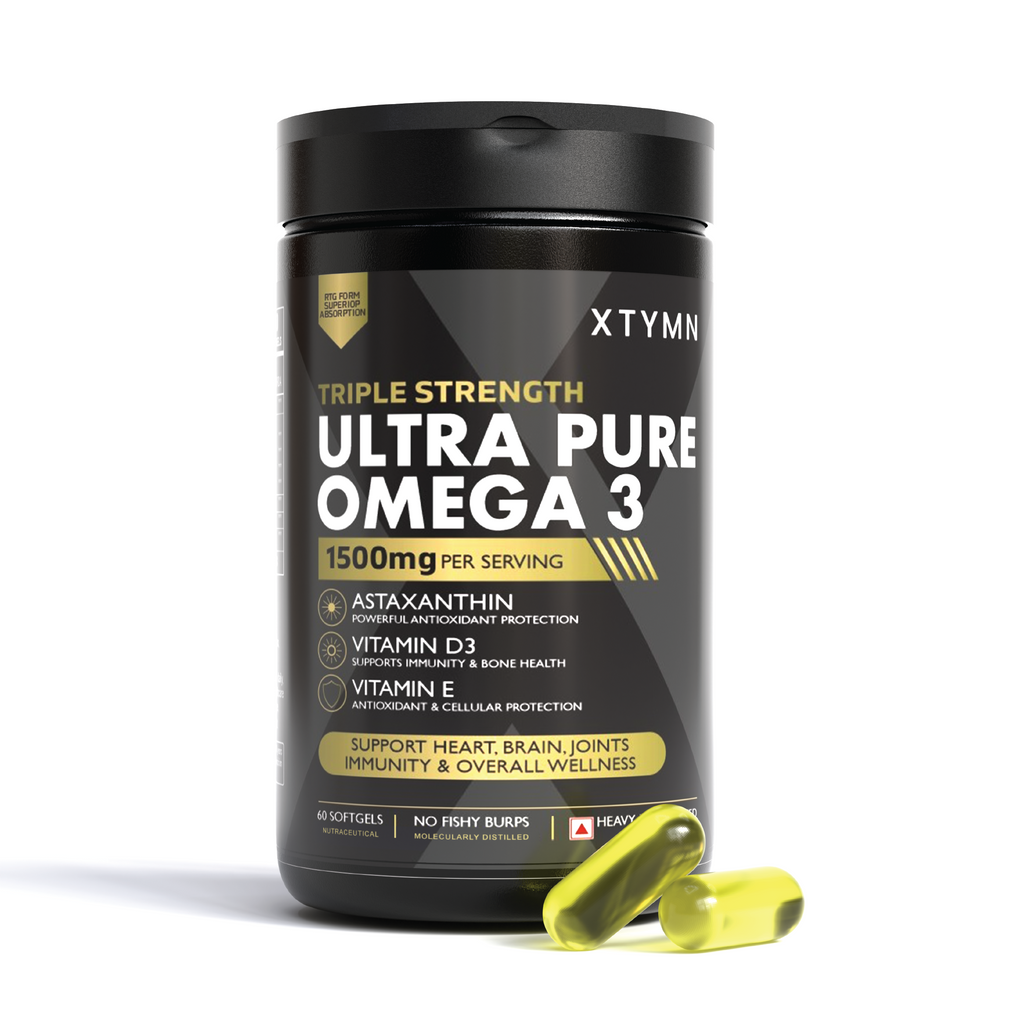
Antioxidant partners help here too. Formulas that pair omega 3 with astaxanthin or vitamin E, such as the XTYMN Triple Strength Omega 3 1500mg, are built to keep the oil stable in the capsule.
Which XTYMN Fish Oil Should You Choose?
- 5X Strength Omega 3 2000mg – the highest concentration option, with vitamin D3, vitamin K2 MK-7, CoQ10 and astaxanthin added for heart, bone, brain and immune support. Best if you want maximum EPA and DHA in the fewest softgels.
- Triple Strength Omega 3 1500mg – a strong everyday concentration with astaxanthin, vitamin D3 and vitamin E. A balanced pick for heart, brain, joint and immunity support.
- Salmon Fish Oil 1000mg – a gentler, classic single-source option for people who simply want to close the gap left by a low-fish diet.
You can compare the full range on the XTYMN supplements collection.
How and When Should You Take Fish Oil?
Quick answer: take fish oil with a meal that contains some fat. Omega 3 is fat soluble, so absorption improves significantly when it is not taken on an empty stomach. Taking it with food also reduces the fishy aftertaste that puts many people off.
Consistency beats timing. Omega 3 levels in your cell membranes build up gradually, so daily use over several weeks matters far more than whether you take it at breakfast or dinner.
Who Should Be Careful With Fish Oil?
Speak to a healthcare professional first if you take blood-thinning medication, have a bleeding disorder, are scheduled for surgery, are pregnant or breastfeeding, or have a seafood allergy. Fish oil is well tolerated by most people, but these situations deserve individual advice.
Frequently Asked Questions
Is 1000mg of fish oil the same as 1000mg of omega 3?
No. Fish oil weight is the whole oil. Omega 3 content is the EPA and DHA inside it. A 1000mg fish oil softgel often supplies only around 300mg of combined EPA and DHA, which is why concentration matters.
Should I take EPA or DHA?
For most people, both. EPA is more associated with inflammatory balance, heart and joint support, while DHA is more associated with brain, nerve and eye structure. A good fish oil supplies both in a sensible ratio.
How long does fish oil take to work?
Omega 3 incorporates into cell membranes gradually. Most people are advised to give it eight to twelve weeks of consistent daily use before judging the effect.
Can I get enough omega 3 from food alone?
Yes, if you regularly eat oily fish such as salmon, mackerel or sardines two to three times a week. Most people do not, which is why supplementation is common.
Does fish oil cause fishy burps?
It can, usually when the oil is oxidised or taken on an empty stomach. A well-purified, enteric-friendly formula taken with food largely solves it. Storing the bottle away from heat and light also helps.
Can vegetarians take omega 3?
Not fish oil, but algal oil supplies DHA and some EPA from the original source that fish get it from. Flaxseed and chia supply ALA only.
The Bottom Line
Omega 3 is not one nutrient doing one job. EPA supports your inflammatory balance, heart and joints. DHA physically builds your brain, nerves and eyes. Judge a fish oil by its combined EPA and DHA per serving, its purity testing and its freshness – not by the biggest number on the label. If you want the most EPA and DHA per softgel, start with the XTYMN 5X Strength Omega 3; if you want a balanced daily option, the Triple Strength Omega 3 is the easier place to begin.
This article is for informational purposes only and is not a substitute for professional medical advice. Please consult a qualified healthcare provider before starting any new supplement.